Python
loading
·
loading
·
Table of Contents
Video 📹#
Overview 📌#
Python is an interpreted, high-level, general-purpose programming language, known for its easy-to-read syntax.
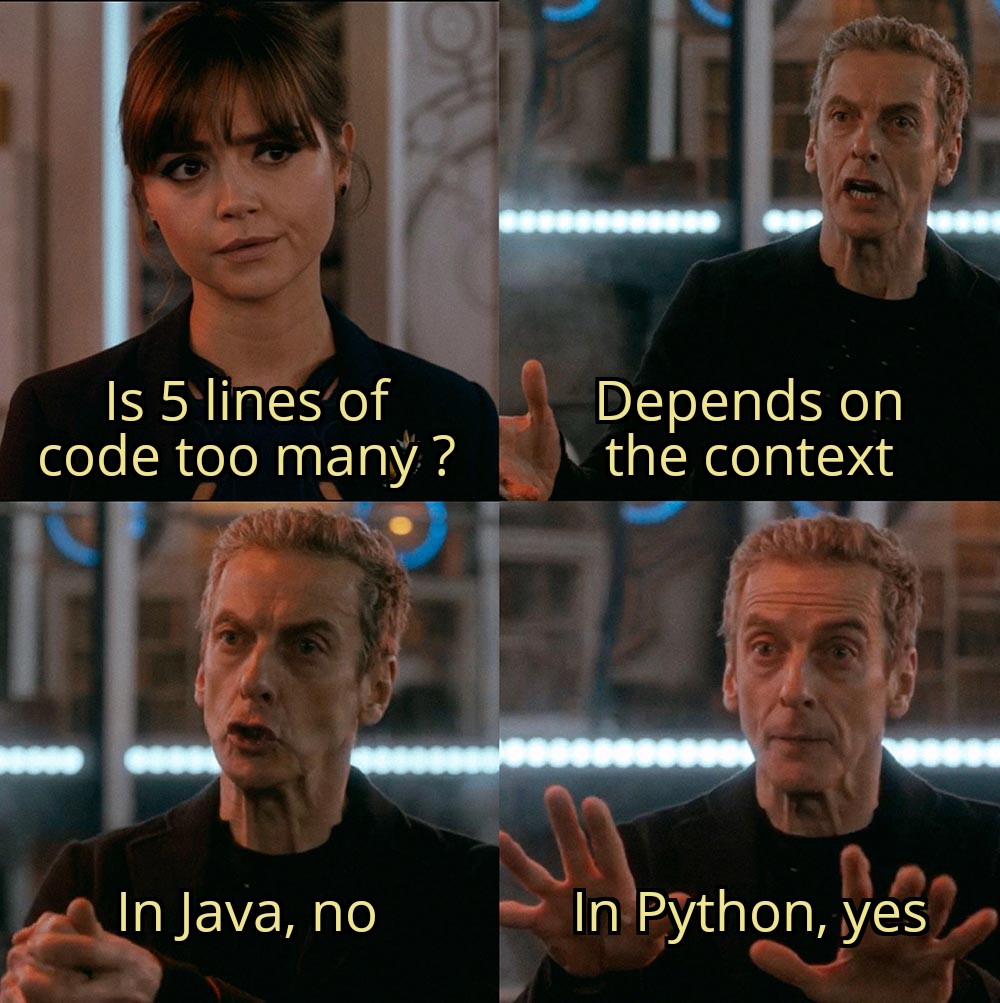
Python allows programmers to express concepts in fewer lines of code than other languages such as C++ or Java.
History of Python? 🧠#
Python was created by Guido van Rossum in 1991. Python’s name is inspired by Monty Python’s Flying Circus, a British sketch comedy series.
Over the years, Python has grown to become one of the most popular programming languages in the world.
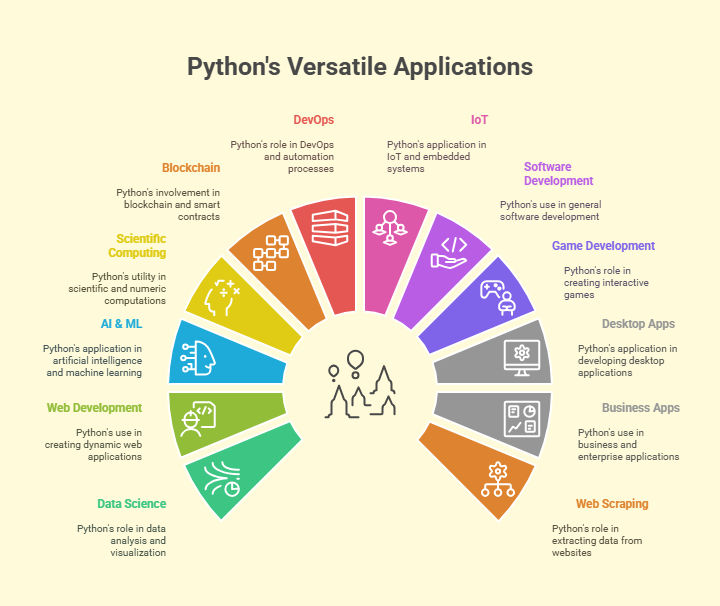
Python is a versatile language used in a wide variety of applications, including:
- Web-Development
- Data Science / Machine Learning
- Automation
- Software Development
- Network Programming.
Python is known for its clean and readable syntax, making it an excellent choice for beginners and experienced developers alike.
Syntax Features 🍳#
Python uses indentation to define the structure of the code (which enhances readability…)

Variables in Python do not need explicit declaration of their type. (The type is inferred based on the value assigned)
Python comes with a comprehensive standard library that provides tools suited to many tasks.

Installing Python 📧#
To get started with Python, you need to install it on your computer!
Important
You can download Python from the Official Python Website.
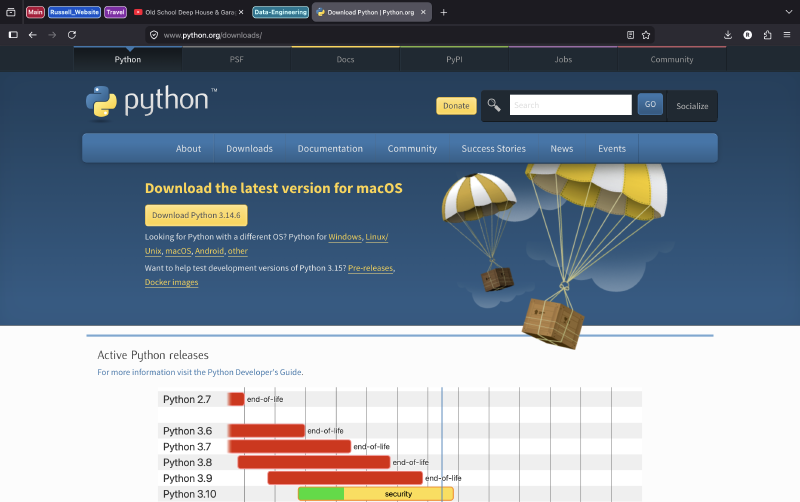
Then, follow the installation instructions specific to your operating system.
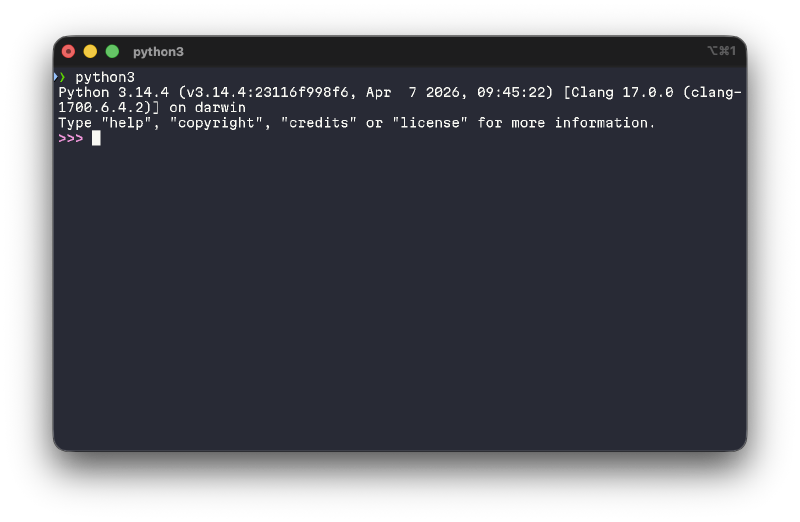
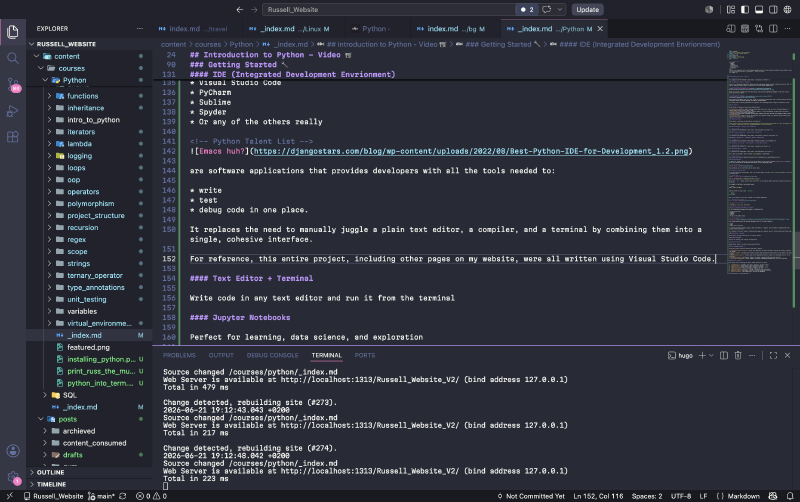
Once installed, you can run Python code in several ways:
Through your terminal
In an IDE such as Visual Studio Code (or Pycharm).
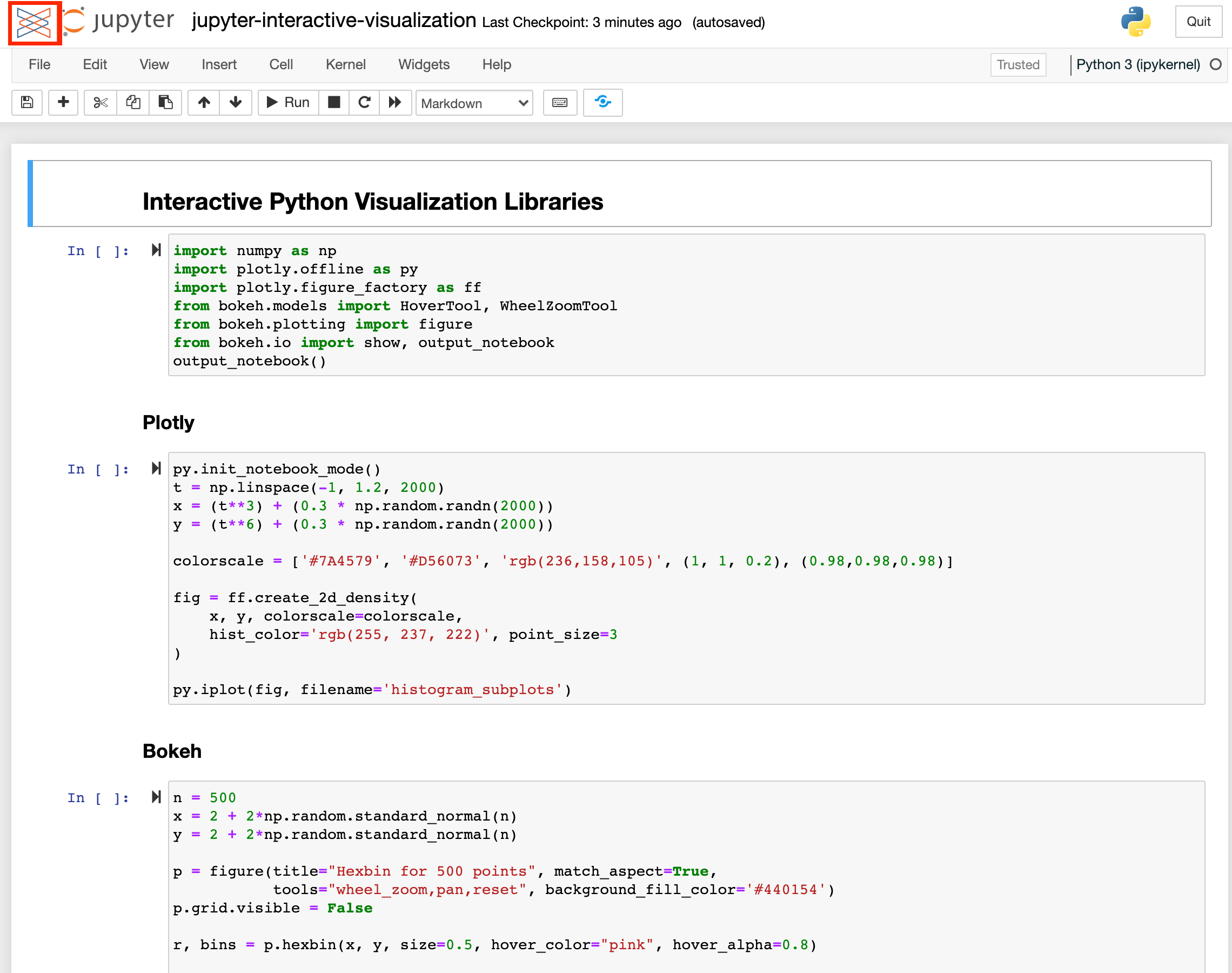
Or in a Notebook application (such as Google Colab, or Jupyter)
Course Content 🔗#
Without further ado… Here’s the course content!
2026